
What Is Automotive Plastic Injection Molding?
Automotive plastic injection molding turns qualified resin into repeatable vehicle parts through a controlled combination of part design, tooling, processing, inspection, and change management. A weak RFQ treats molding as a machine cycle. A workable program defines functional needs, evidence, ownership, and approval gates before steel gets cut. This guide helps engineering, quality, and sourcing teams build that definition without assuming every supplier follows identical automotive procedures.
1. What does automotive plastic injection molding include?
Automotive molding covers far more than filling a cavity. Each approved part depends on linked decisions about geometry, resin, mold architecture, process settings, measurement methods, assembly interfaces, and release evidence. A bumper bracket, connector housing, trim clip, and fluid-system component can all use injection molding. Their risk profiles remain quite different.
Start with scope, not tonnage. Machine size matters only after part requirements and mold layout establish process needs.
A complete program scope should identify:
- part function and vehicle environment;
- tooling supply, molding supply, or both;
- prototype, trial, launch, and serial-production stages;
- required records, samples, and approval authority.
The practical recommendation is to describe automotive plastic injection molding as one controlled production system in every RFQ. That wording prevents gaps between a toolmaker, molder, laboratory, and assembly site.
Which scope elements need an owner?
| Scope element | Primary question | Evidence before approval |
|---|---|---|
| Part definition | What must the component do? | Released CAD, drawing, and specifications |
| Tooling | Who designs, owns, maintains, and changes the mold? | Tool concept, ownership terms, and service plan |
| Molding | Which process window and equipment class apply? | Trial data and documented setup basis |
| Validation | Who approves dimensions, appearance, and function? | Agreed reports and signed disposition |
2. What should an automotive RFQ define before tooling starts?
An RFQ needs enough technical context for suppliers to quote the same job. CAD alone rarely carries material grade, cosmetic zones, datum intent, annual demand, packaging, validation, or customer-specific records. Missing technical inputs become hidden assumptions. Different assumptions make quotations look comparable when they are not.
A quotation can only be as clean as its inputs. Ask every bidder to list exclusions and open points beside price and timing.
Include these items in the RFQ pack:
- 3D data plus a controlled 2D drawing;
- specified resin, color, additives, and approved alternatives;
- annual demand, peak demand, service life, and launch profile;
- critical features, mating parts, appearance zones, and test conditions;
- required submission format and customer-specific requirements.
Recommend a technical clarification round before commercial comparison. Close ambiguous material, cavity, gauge, and validation assumptions in writing before issuing a tooling purchase order.
What belongs in the RFQ baseline?
| RFQ input | Why it changes the quote | Buyer check |
|---|---|---|
| Demand profile | Drives cavity count and equipment planning | State annual and peak volume |
| Material specification | Affects shrinkage, wear, drying, and processing | Name grade and substitution rules |
| Critical characteristics | Drives tool strategy and inspection effort | Mark function-linked features |
| Approval package | Changes sampling, records, and coordination | Define format, approver, and due gate |
3. How do part design and mold design affect program risk?
Part geometry creates molding conditions long before a press runs. Abrupt wall changes can alter packing and cooling. Tall ribs or deep bosses may complicate filling and ejection. Datum choices can either support repeatable inspection or magnify setup variation. Tool design must answer those realities through gates, vents, cooling, parting strategy, slides, lifters, and ejection.
Geometry writes the process bill. A cheap feature on screen may require costly steel movement or a narrow molding window.
Review these interfaces together:
- nominal wall, transitions, ribs, bosses, and draft;
- gate location versus visible and functional surfaces;
- weld-line exposure near loaded features;
- cooling access around thick or asymmetric regions;
- ejection marks, flash risk, and datum accessibility.
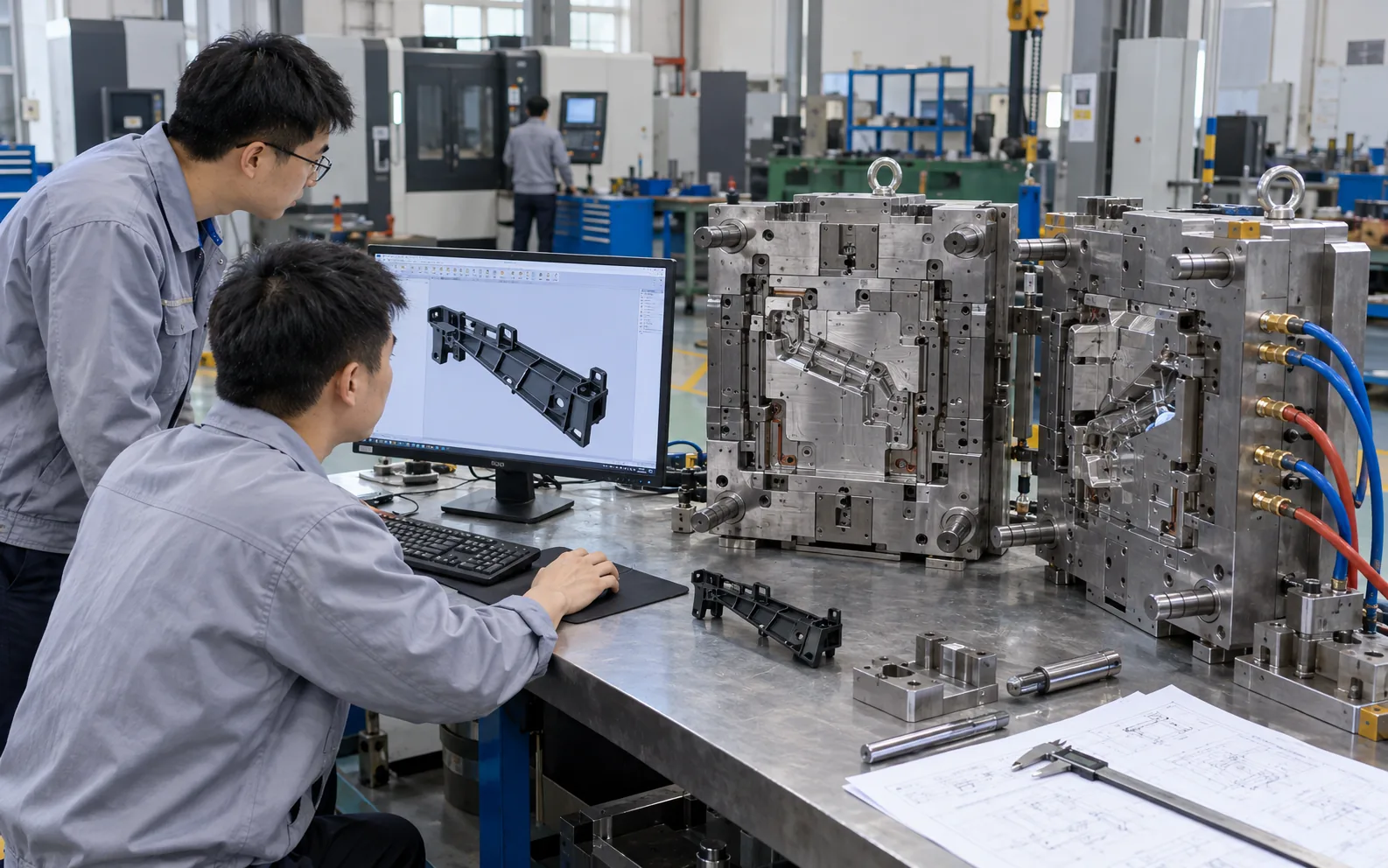
Recommend one joint DFM review with product, tooling, molding, quality, and assembly owners present. Record every accepted risk and drawing change before tool-detail release.
Which design choices need early closure?
| Design choice | Possible program effect | Required decision record |
|---|---|---|
| Wall transition | Sink, warp, cooling imbalance | Accepted geometry or redesign |
| Gate position | Weld lines, appearance, packing | Gate concept and surface limits |
| Datum scheme | Measurement and assembly variation | Drawing datum agreement |
| Side action | Tool complexity and maintenance | Mechanism concept and access plan |
4. How should materials be selected for an automotive part?
Material selection starts with service conditions. Heat, cold, fluids, UV exposure, humidity, load duration, impact, electrical behavior, odor, appearance, and regulatory obligations can narrow candidates. Flow and shrinkage also affect mold design. A family name such as “nylon” or “PP” cannot replace a controlled grade.
Material grade shapes molded geometry. Changing resin after tool design can move shrinkage, stiffness, appearance, and processing behavior together.
Build a material requirement sheet that covers:
- continuous and peak temperature exposure;
- mechanical load, creep, impact, and fastening conditions;
- fluid, chemical, weathering, and cabin-contact exposure;
- color, texture, gloss, odor, and visible-surface limits;
- grade approval, lot identification, drying, and substitution controls.
The action recommendation is to obtain material-owner approval before final shrinkage and gate decisions. Any proposed substitute should trigger a documented review of fit, function, processing, and validation impact.
How should material evidence be compared?
| Requirement group | Evidence requested | Program risk if omitted |
|---|---|---|
| Environment | Condition-specific data or test plan | Premature loss of function |
| Processing | Grade data and molding guidance | Unstable fill or appearance |
| Dimensional behavior | Shrinkage basis and trial confirmation | Tool correction or poor fit |
| Control | Exact grade and change rules | Unapproved material variation |
5. What tooling choices deserve buyer review?
Tooling decisions set capacity, maintenance burden, repair options, and part consistency. Buyers should examine cavity count, steel selection, interchangeable inserts, hot or cold runner strategy, venting, cooling circuits, ejection, sensors, and spare components. No single architecture fits every annual volume or resin.
Tool price hides a long tail. Access for cleaning, insert replacement, and dimensional correction can matter after launch more than a small purchase-price gap.
Ask for a tooling review that covers:
- cavity strategy and balance assumptions;
- steel and treatment by wear or corrosion exposure;
- cooling layout around critical features;
- replaceable inserts near vulnerable details;
- maintenance access, spare list, and ownership terms.
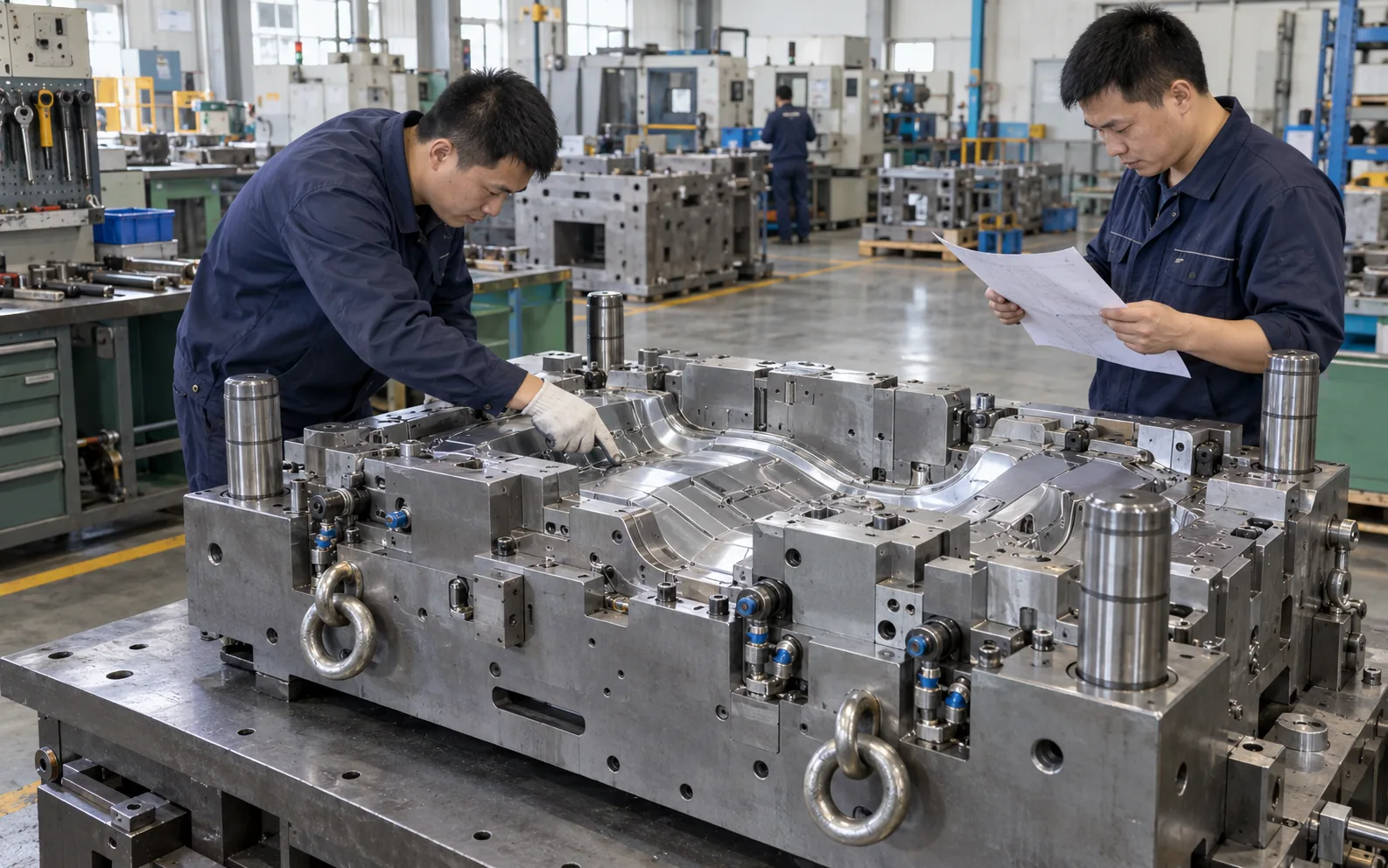
Recommend approving a written tool specification before detailed design. Avoid accepting a mold-life number unless material, maintenance, cycle, wear features, and acceptance conditions support that commitment.
Which tooling tradeoffs should be visible?
| Tooling choice | Potential benefit | Review question |
|---|---|---|
| More cavities | Higher output per cycle | Can balance, cooling, and demand support it? |
| Replaceable inserts | Faster local repair | Are interfaces accessible and repeatable? |
| Hot runner | Less runner scrap in suitable cases | Do resin, color changes, and service needs fit? |
| Added sensing | Better process visibility | Who maintains data and hardware? |
6. What should validation prove before production approval?
Validation should show that released parts meet agreed requirements under defined conditions. A dimensional report alone cannot prove assembly, appearance, material identity, or performance. Conversely, a functional pass cannot excuse uncontrolled dimensions that matter during future production. Required records vary by customer and program.
Evidence needs a question behind it. Each report should answer a named approval requirement rather than fill a generic folder.
A program may require evidence for:
- dimensions and geometrical characteristics;
- material identity and specified tests;
- appearance, texture, color, and boundary samples;
- assembly fit and interface performance;
- process conditions, sampling, packaging, and traceability.
Recommend creating an evidence matrix with requirement, method, sample condition, owner, due gate, and approver. Confirm any PPAP or APQP deliverable directly with both customer and supplier; certification alone does not define a supplier's execution scope.
What should an approval matrix contain?
| Evidence class | Core question | Release condition |
|---|---|---|
| Dimensional | Does the part match controlled specifications? | Approved report and disposition |
| Material | Was the agreed grade used and tested as required? | Traceable records accepted |
| Functional | Does the part work in stated conditions? | Test criteria passed |
| Process | Can production repeat an agreed setup? | Trial basis and controls accepted |
7. What supplier evidence matters for an automotive program?
Supplier selection should examine evidence at system, tool, process, and part levels. A certificate helps with qualification, though it does not replace program-specific proof. Equipment lists also need context: available press range, mold fit, metrology access, maintenance support, staffing, and escalation paths all affect execution.
A logo wall cannot close a launch issue. Ask who owns problems, how evidence moves, and what happens after a failed trial.
Review this complete supplier evidence set.
- quality-system certificate scope and validity;
- relevant automotive part or mold examples;
- toolmaking, molding, and measurement resources;
- material, change, traceability, and nonconformance controls;
- capacity assumptions, backup planning, and issue-closure records.
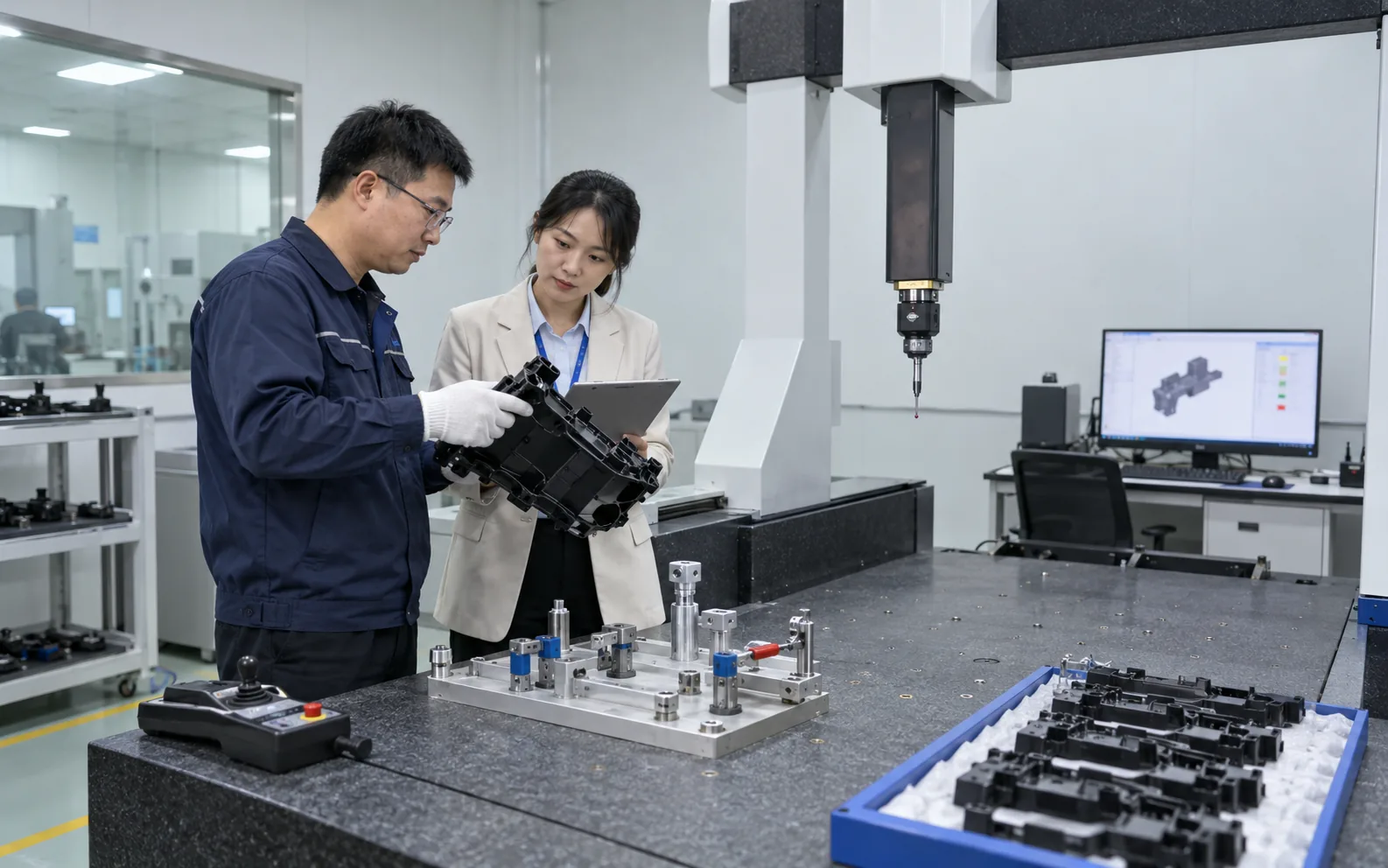
Our current company profile confirms IATF 16949:2016, automotive work, CMM and optical measurement equipment, plus tooling and molding under one organization. It does not confirm a universal APQP or PPAP service scope. Recommend verifying required documents during RFQ review.
How should supplier evidence be judged?
| Evidence | What it supports | Follow-up question |
|---|---|---|
| IATF certificate | Automotive quality-system qualification | Does scope cover proposed site and activity? |
| Relevant project record | Experience with similar risks | What part, tool, or process challenge was handled? |
| Metrology list | Available inspection resources | Which features can be measured and under what method? |
| Issue log example | Problem ownership and closure discipline | How are actions verified before release? |
8. How do program changes affect cost and timing?
Late changes can reach several linked outputs at once. A resin change may alter shrinkage, cooling, venting, or validation. Higher annual demand may change cavity strategy and press planning. A new cosmetic boundary can affect gate location and steel texture. Revised datums can invalidate fixtures or measurement programs.
Change cost follows frozen work. A revision after detailed design or steel cutting carries a different burden than an RFQ clarification.
Every change request should state:
- released baseline and proposed revision;
- reason, owner, and requested implementation date;
- effect on part, mold, process, gauge, validation, and inventory;
- commercial and timing impact;
- approval authority and revision trace.
Recommend pausing affected work until both parties accept a written impact review. This protects schedule logic and keeps obsolete requirements out of trials.
Which changes need cross-functional review?
| Change | Likely affected areas | Minimum review |
|---|---|---|
| Resin grade | Shrinkage, process, tests, color | Material, tooling, quality |
| Geometry | Steel, cooling, ejection, assembly | Product, tooling, manufacturing |
| Demand | Cavities, equipment, capacity | Sourcing, operations, finance |
| Critical feature | Gauge, sampling, capability | Design, quality, supplier |
9. How should buyers compare automotive molding suppliers?
Use one normalized comparison baseline. If Supplier A quotes two cavities and Supplier B assumes four, their prices and schedules answer different questions. Normalize resin, cavity strategy, ownership, spare scope, trial quantity, validation package, packaging, and forecast before scoring.
Comparable bids need comparable assumptions. Separate confirmed evidence from planned work and open clarification.
Score each supplier against:
- technical response to named part risks;
- tooling concept and serviceability;
- material-control and process plan;
- validation deliverables and approval support;
- capacity, communication, and change-control evidence.
Recommend requiring evidence references beside each score. A polished presentation should not outweigh a clear risk response, controlled assumption list, or credible issue-closure method.
What belongs in a supplier scorecard?
| Scorecard area | Strong response | Warning sign |
|---|---|---|
| Requirements | Lists assumptions and unresolved points | Quotes without technical questions |
| Tool concept | Connects design choices with part risks | Offers a generic tool description |
| Validation | Names records, conditions, and owners | Promises approval without scope |
| Program control | Shows milestones and change handling | Relies on informal updates |
10. What should you do before approving the supplier and tool plan?
Approval should close known assumptions rather than reward fastest quotation. Put part requirements, tool decisions, process evidence, and commercial scope into one controlled baseline. Open items need owners and dates. High-risk features need an agreed verification path.
Your last review should remove surprises. It should not repeat sales claims.
Before approval, confirm:
- released CAD, drawing, material, and demand profile;
- tool specification, ownership, maintenance, and change terms;
- trial stages, sample conditions, and acceptance authority;
- required quality records and customer-specific submissions;
- launch capacity, packaging, traceability, and escalation contacts.
Recommend sending the complete RFQ pack before asking for a final tooling commitment. For a useful feasibility review, provide 3D data, a controlled drawing, material grade, annual volume, critical features, and required automotive submission scope.
Frequently Asked Questions
Q1: Who should own an automotive injection mold?
Ownership depends on the commercial agreement. Record title, storage, maintenance, insurance, access, transfer rights, and end-of-program disposition before purchase.
Q2: Does IATF 16949 certification prove PPAP capability?
No, because certification and program submissions serve different purposes. IATF supports automotive quality-system qualification. Buyers should confirm exact customer-specific submissions, templates, timing, and supplier responsibilities for each program.
Q3: Can a supplier select the resin from a family name?
That approach creates avoidable program risk. Specify an approved grade or define a controlled selection process using service, regulatory, appearance, processing, and validation requirements.
Q4: What should a tooling trial prove?
A trial should answer agreed questions about fill, appearance, dimensions, assembly, process behavior, and corrective actions under documented sample conditions.
Q5: What inputs produce a useful automotive molding quote?
Provide CAD, drawing, resin grade, forecast, cosmetic requirements, critical features, target milestones, packaging needs, and required validation records.